之前在文章《Golang 底层实现之map》里介绍过map在高并发场景下赋值or更新时会检查其标志位flags,当有其他协程在进行“写”操作时会触发panic。
通常为了避免程序出现预期之外的并发读写问题,我们会对map进行加锁保护,或者直接使用官方提供的并发安全map——sync.map。
所以本文将从底层实现的角度介绍sync.map,并给出在哪些场景下更适合使用sync.map。
底层实现
一句话总结:sync.map本质是运用读写分离(也可以理解为空间换时间)的数据思路来解决高并发读写问题。
数据结构
// go 1.19+
type Map struct {
	_ noCopy

	mu Mutex
	// 1.read 是 map 的只读视图,支持无锁并发访问
	// 2.更新 read 指针需要加锁(mu)
	// 3.常规更新可以直接无锁进行(原子操作*entry)
	// 4.expunged 状态表示条目已被逻辑删除但尚未物理清除
	read atomic.Pointer[readOnly]

	// 1.dirty 是需要加锁访问的数据集
	// 2.dirty 包含 read 中所有有效(未逻辑删除)条目,以方便快速提升
	// 3.expunged 条目不会进入 dirty
	// 4.更新 expunged 条目需要先将其移回 dirty
	// 5.dirty 的初始化采用懒加载模式(第一次写入时浅拷贝 read)
	dirty map[any]*entry

	// 1.misses 用于统计自上次更新 read map 以来,需要加锁(mu)才能确定键是否存在的加载操作次数,无论key是否在 dirty 中
	// 2.当 misses 累计值达到阈值(默认是 dirty 的长度)时提升操作会将 dirty 直接替换为新的 read,同时重置状态
	// 3.下次写入时会基于新的 read 重新创建 dirty(触发懒加载初始化)
	misses int
}

type readOnly struct {
    m       map[any]*entry
    amended bool // Map.dirty的数据和Map.read不一样时为true
}

type entry struct {
    p atomic.Pointer[any]
}
读
// Load returns the value stored in the map for a key, or nil if no
// value is present.
// The ok result indicates whether value was found in the map.
func (m *Map) Load(key any) (value any, ok bool) {
	read := m.loadReadOnly()
	e, ok := read.m[key]
	if !ok && read.amended {
		m.mu.Lock()
		// Avoid reporting a spurious miss if m.dirty got promoted while we were
		// blocked on m.mu. (If further loads of the same key will not miss, it's
		// not worth copying the dirty map for this key.)
		read = m.loadReadOnly()
		e, ok = read.m[key]
		if !ok && read.amended {
			e, ok = m.dirty[key]
			// Regardless of whether the entry was present, record a miss: this key
			// will take the slow path until the dirty map is promoted to the read
			// map.
			m.missLocked()
		}
		m.mu.Unlock()
	}
	if !ok {
		return nil, false
	}
	return e.load()
}

func (m *Map) loadReadOnly() readOnly {
    if p := m.read.Load(); p != nil {
    return *p
    }
    return readOnly{}
}
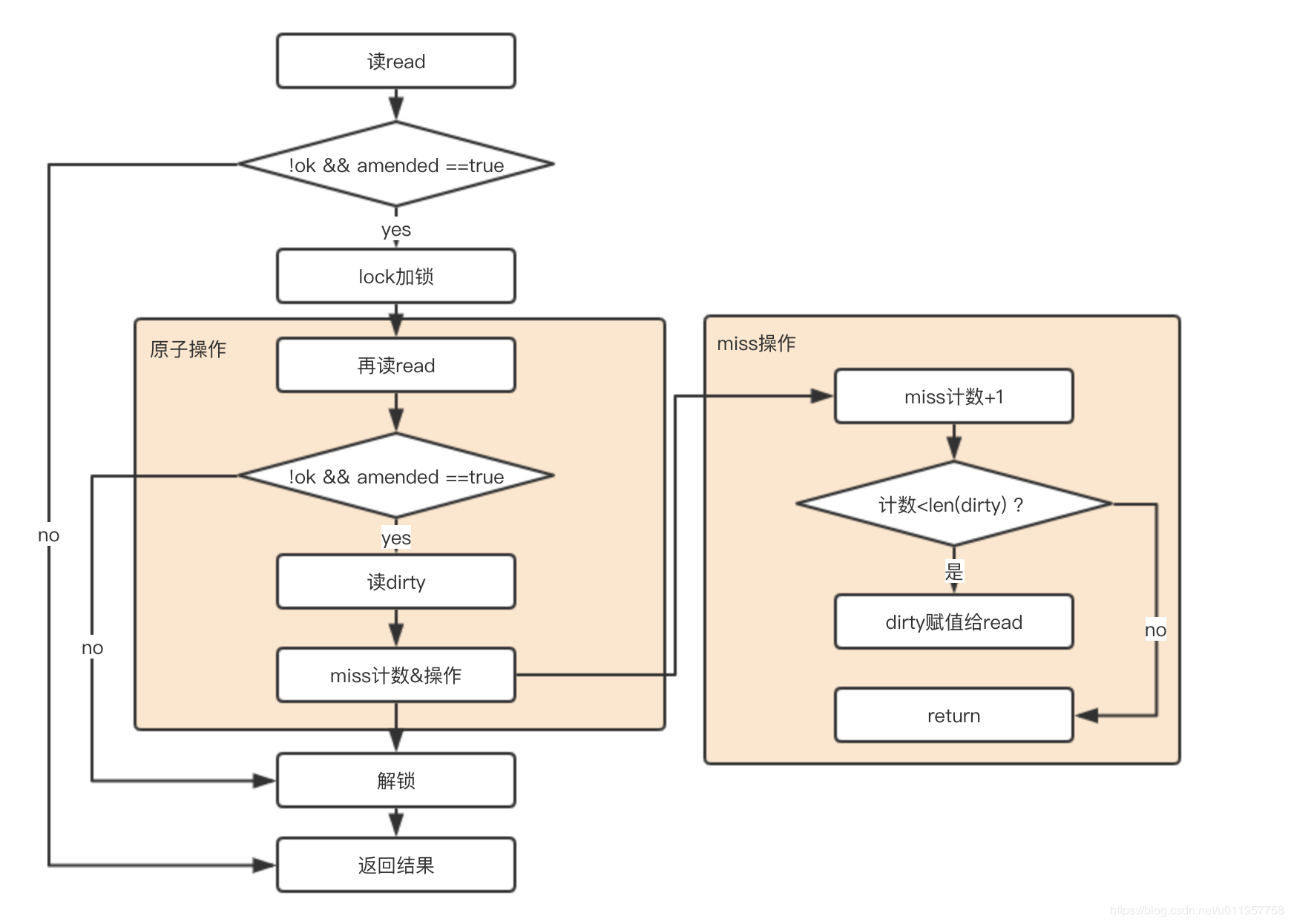
结合下图和源码注释可以很好的理解Load函数逻辑:
- 快速路径(无锁读取)
- 首先原子加载 readOnly 结构
- 直接从 read.m 中查找键
- 如果找到且 !read.amended,直接返回结果(无锁操作)
- 慢速路径(加锁读取)
- 当键不在 read 中且 read.amended 为 true 时:
a. 获取互斥锁 m.mu
b. 双重检查(避免在加锁期间 dirty 已提升为 read)
c. 从 dirty map 中查找键
d. 记录一次 miss(用于触发后续的 dirty 提升)
e. 释放锁
- 当键不在 read 中且 read.amended 为 true 时:
- 结果处理
- 如果找到 entry,调用 e.load() 加载实际值
- 未找到则返回 (nil, false)
删
// Delete deletes the value for a key.
func (m *Map) Delete(key any) {
	m.LoadAndDelete(key)
}

// LoadAndDelete deletes the value for a key, returning the previous value if any.
// The loaded result reports whether the key was present.
func (m *Map) LoadAndDelete(key any) (value any, loaded bool) {
	read := m.loadReadOnly()
	e, ok := read.m[key]
	if !ok && read.amended {
		m.mu.Lock()
		read = m.loadReadOnly()
		e, ok = read.m[key]
		if !ok && read.amended {
			e, ok = m.dirty[key]
			delete(m.dirty, key)
			// Regardless of whether the entry was present, record a miss: this key
			// will take the slow path until the dirty map is promoted to the read
			// map.
			m.missLocked()
		}
		m.mu.Unlock()
	}
	if ok {
		return e.delete()
	}
	return nil, false
}

func (e *entry) delete() (value any, ok bool) {
	for {
		p := e.p.Load()
		if p == nil || p == expunged {
			return nil, false
		}
		if e.p.CompareAndSwap(p, nil) {
			return *p, true
		}
	}
}
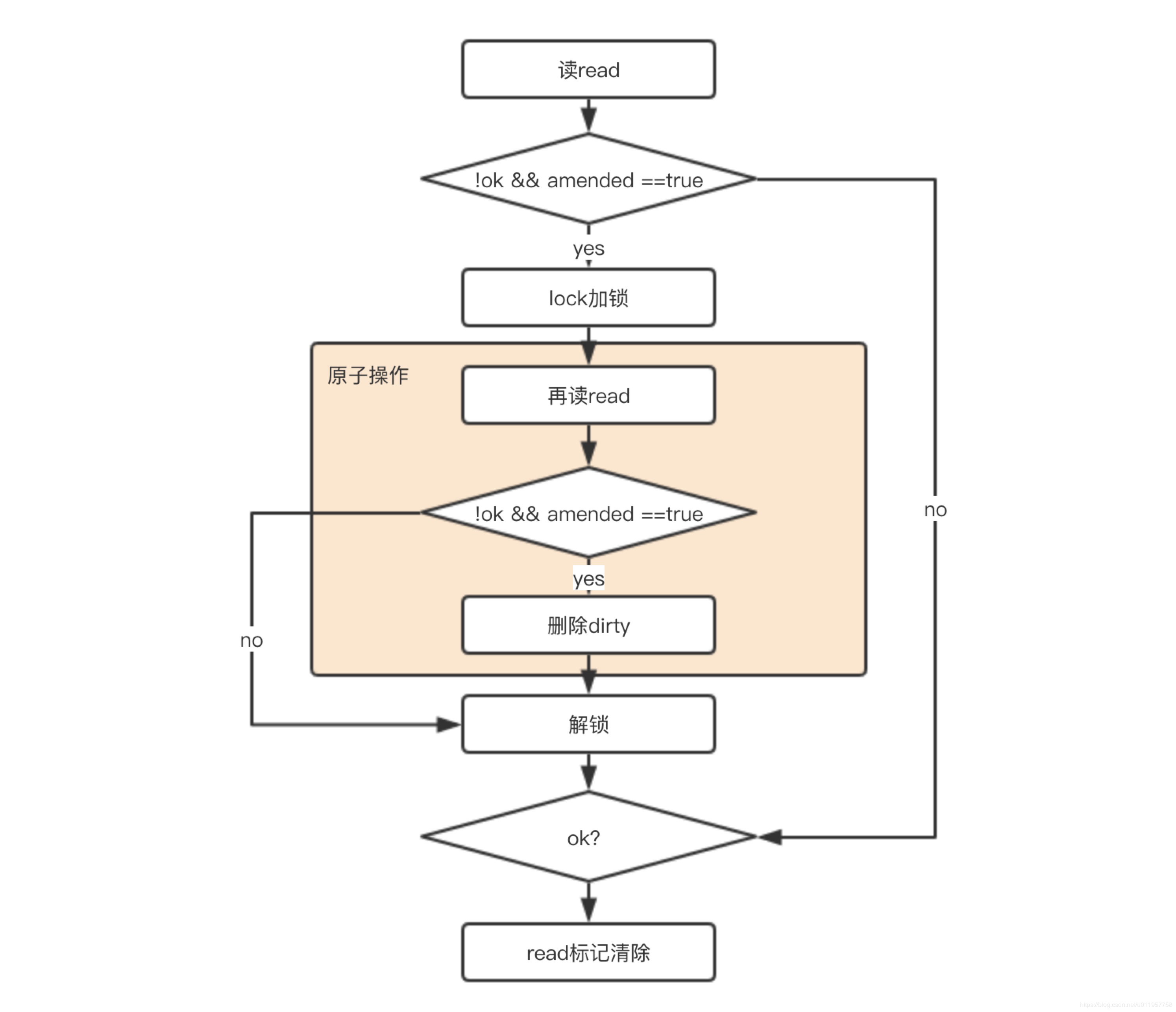
删除逻辑大致相似Load,只不过增加了相应的删除逻辑:
- 删除存在于 read 的键:通过原子操作将 entry.p 设为 nil,值仍保留在 read 中(逻辑删除)。
- 删除仅存在于 dirty 的键:加锁从 dirty 中物理删除,记录 miss 计数。
写
// Store sets the value for a key.
func (m *Map) Store(key, value any) {
	_, _ = m.Swap(key, value)
}

// Swap swaps the value for a key and returns the previous value if any.
// The loaded result reports whether the key was present.
func (m *Map) Swap(key, value any) (previous any, loaded bool) {
	read := m.loadReadOnly()
	if e, ok := read.m[key]; ok {
		// trySwap swaps a value if the entry has not been expunged.
		if v, ok := e.trySwap(&value); ok {
			if v == nil {
				return nil, false
			}
			return *v, true
		}
	}

	m.mu.Lock()
	read = m.loadReadOnly()
	if e, ok := read.m[key]; ok {
		if e.unexpungeLocked() {
			// The entry was previously expunged, which implies that there is a
			// non-nil dirty map and this entry is not in it.
			m.dirty[key] = e
		}
		if v := e.swapLocked(&value); v != nil {
			loaded = true
			previous = *v
		}
	} else if e, ok := m.dirty[key]; ok {
		if v := e.swapLocked(&value); v != nil {
			loaded = true
			previous = *v
		}
	} else {
		if !read.amended {
			// We're adding the first new key to the dirty map.
			// Make sure it is allocated and mark the read-only map as incomplete.
			m.dirtyLocked()
			m.read.Store(&readOnly{m: read.m, amended: true})
		}
		m.dirty[key] = newEntry(value)
	}
	m.mu.Unlock()
	return previous, loaded
}


func (m *Map) dirtyLocked() {
	if m.dirty != nil {
		return
	}

	read := m.loadReadOnly()
	m.dirty = make(map[any]*entry, len(read.m))
	for k, e := range read.m {
		if !e.tryExpungeLocked() {
			m.dirty[k] = e
		}
	}
}
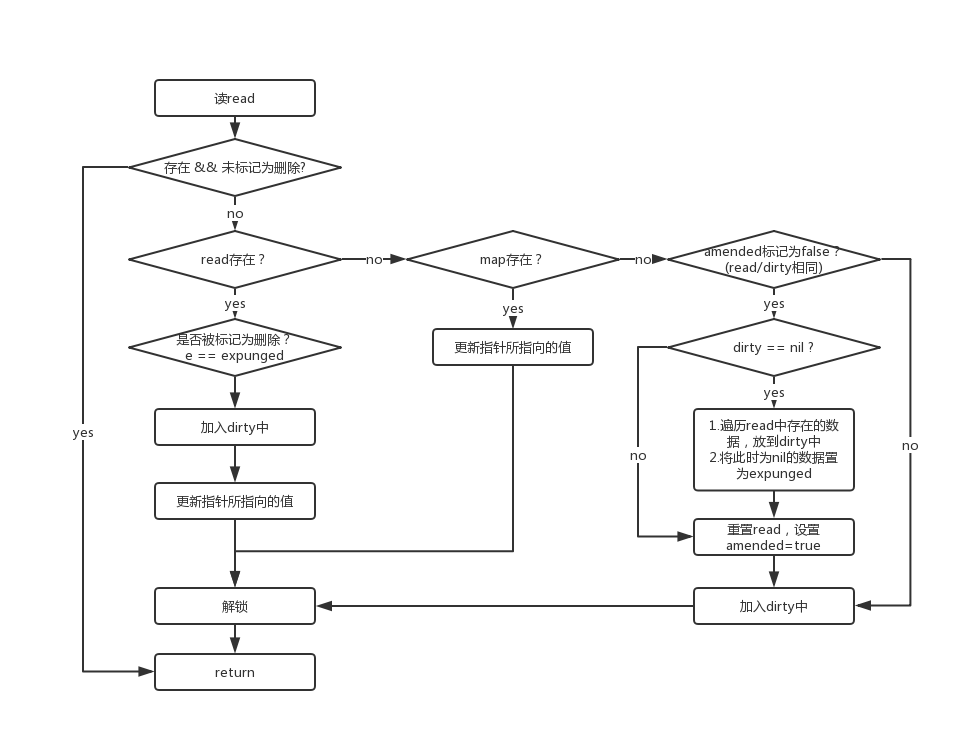
遍历
如果已经熟悉了Sync.Map的读写逻辑,那么遍历操作没啥好讲的了,直接看源码吧
func (m *Map) Range(f func(key, value any) bool) {
read := m.loadReadOnly()
if read.amended {
m.mu.Lock()
read = m.loadReadOnly()
if read.amended {
read = readOnly{m: m.dirty}
copyRead := read
m.read.Store(©Read)
m.dirty = nil
m.misses = 0
}
m.mu.Unlock()
}
for k, e := range read.m {
v, ok := e.load()
if !ok {
continue
}
if !f(k, v) {
break
}
}
}
场景推荐
| 场景 | 推荐方案 |
|---|---|
| 全局配置、只读缓存 | sync.Map |
| 高并发读、低频更新 | sync.Map |
| 计数器、排行榜 | sync.Mutex + map |
| 需要遍历或复杂操作 | sync.Mutex + map |
| 内存敏感 | sync.Mutex + map |